


 17 / 32

F
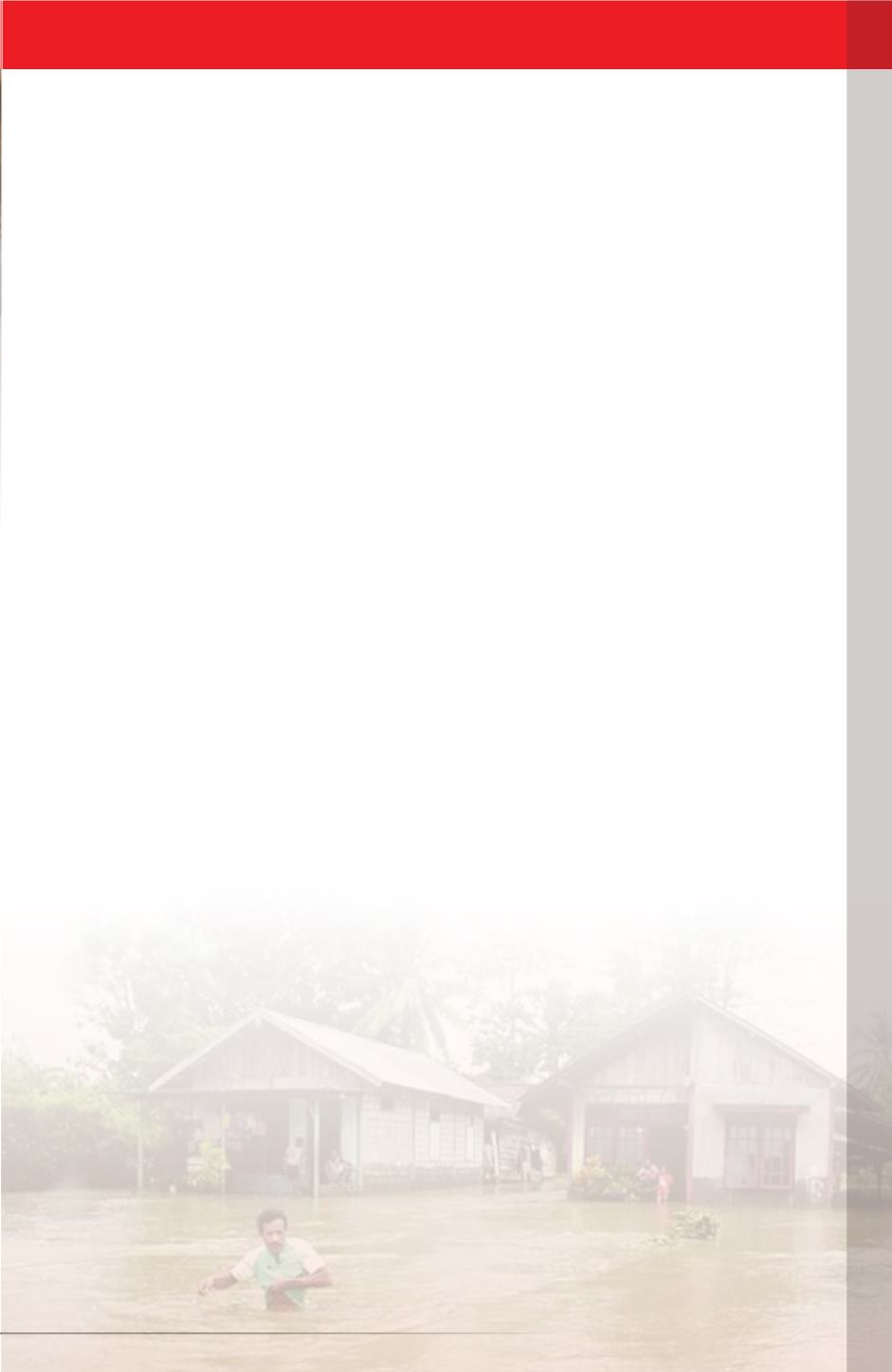
lood is a natural disaster that should be given
full attention because it threatens the life and
economy of the country. According to a study by the
World Meteorological Organization (WMO), flood is
the third natural disaster that has claimed many lives
and damage to property. Flood that occurs due to
monsoon and flash floods will continuously happens
in this country despite of various structural and non-
structural measures that have been taken by the
government to reduce its impact. With the increase in
population and development is concentrated at the
river valleys, this problem cannot be avoided. Within
the last decade the country has experienced several
major floods. The government has taken few steps
in addressing this issue such as the establishment of
flood disaster supervisory bodies, implementation of
flood mitigation projects and implementation of non-
structural measures with establishment of systems for
flood prediction to reduce loss of life and property
due to flood. However, the responsibility cannot be
solely given to the government because as a human
being, there are few steps that can be taken to face
this problem.
Before the Flood
• Get information about flooding in your area.
• Ensure flood warning system, preparation for flood
and how the information is transmitted.
• Check the drains. Clear any obstructions and make
sure it is securely closed so water does not overflow
through it.
• Ensure evacuation centers and disaster recovery
centers in your area. Do the training for emergency
evacuation plan.
• Provide emergency equipment.
• Assure your whole family knows actions to be
taken in emergency at home.
Before the Flood - During Signs Detected
• Listen to the announcement from the radio,
television, internet etc.
• Fill barrels, containers, sink or tub with clean water
since during flood, water may be dirty.
• Bring in furniture or appliances outside the home.
• Place important documents in a safe place or bring
along in a waterproof container.
• Ready to switch off the electricity, water supply
main valve and gas.
• Tell your neighbours and be willing to relocate.
During Floods - In The House
• Listen to the announcement from the radio,
television, internet etc.
• Prepared with emergency equipments.
• Immediately move out if the instruction of moving
out is given.
During Floods - Outside the House
• Go to a safe and higher place.
• Avoid contact with flood areas as strong currents
can drift you.
• Do not wander in flooded areas.
• Do not touch any cable or wire.
• Supervise children; do not let them play in drains,
rivers or mines.
• Do not drink flood water.
During Floods - In Vehicles
• Do not continue to across the flood area, turned
back.
• If your vehicle is stopped, lock your vehicle and
leave it, go to a safe place.
During Floods - During Evacuation
• Upon receiving the instruction immediately
moved.
• Evacuate early before flood is rising or during the
day because it is much easier and safer.
• Follow the path that has been specified, the short
route may be blocked.
After the Flood
• Listen to the announcement or wait for orders from
the authorities, do not return home before you are
allowed or until it is completely safe.
• Give assistance to your neighbours or people
with disabilities (parents, children or people with
disabilities).
• Check your house for signs of cracks for it may not
be safe.
• Do not blindly enter a house that is still flooded
because dangers might still be around.
After the Flood - While Entering Buildings
• Wear shoes.
• Check for damages; walls, floors, doors and
windows.
• Check for any signs of the presence of dangerous
animals or insects. Use a timber to remove any
obstacles that shattered on the floor of your house.
• Careful with the ceiling and walls that may crack,
loose and fall.
After the Flood - Check Hazards
• Check the gas pipes that may be burst or leak.
• Check the electrical wires andelectrical equipments
that have been submerged in water.
• Check flammable materials that may flow in during
floods (kerosene, petrol, diesel, etc.).
• Remove infected or exposed food including
canned food.
• Check septic tanks to avoid biological hazards.
• Report any damage of public facilities to the
authorities.
MALAYSIA
FOCUS
| December 2014
17
FLOOD: SAFETY AND PREVENTION
Flood:
Safety and Prevention